The lower back asks very little and carries a great deal, which is why it is usually the first region to announce a long day of sitting, lifting or driving. Ayurveda's household response is characteristically simple: warmth, a rich preparation and rest in a supported position. In classical practice the preparation is often a Kuzhambu, the semi-solid format that stays on the applied area instead of running off, which matters more on the lower back than almost anywhere else. This guide describes a gentle self-care sequence, the rest positions that complete it, and the point at which self-care should hand over to professional guidance.
The format and the region
A Kuzhambu is prepared on a base of three fats, classically sesame, coconut and castor, cooked with herbal decoctions and fresh pastes until it sets soft and dense. It is not an oil and does not behave like one. Warmed gently, it spreads into a thin, stable layer, absorbs slowly and remains where it was placed even on a vertical or curved surface. Professional Ayurveda serves this same region with Kati Basti, a therapy in which warmed preparation is pooled over the lower back inside a ring of dough on a treatment table. The household routine below borrows its logic, warmth held in one place over time, in a form an ordinary evening can accommodate.
What the routine is valued for
- Steady, local warmth for the muscles that stabilise every hour of sitting and standing
- Traditional comfort after long drives, desk days and lifting
- A slow, deliberate pause lying down, which the lower back rarely receives before bed
- Focused use of a rich preparation exactly where it is wanted, without waste
- A practical evening habit that pairs naturally with care of the neighbouring regions
The sequence and the rest positions
Warm the closed jar in a bowl of hot water for five to ten minutes. Standing or sitting, take a teaspoon of the softened preparation and apply it across the lower back with the backs of the fingers, using slow, broad strokes outward from the spine to the sides. Do not press on the spine itself; the muscles to either side are the territory. Ask a partner for this step if reaching is uncomfortable.
Then rest, because the rest is half the routine. Lie on your side with a cushion between the knees, or on your back with the lower legs raised on a chair so the back settles flat. Cover the area with a warm towel and stay there for twenty to thirty minutes. Afterwards, wipe away residue with a warm, damp cloth. The same approach continues upward in our neck and shoulder routine and downward in the Kuzhambu knee routine, and the three together make a complete back-of-body evening.
Choosing between the two house formulas
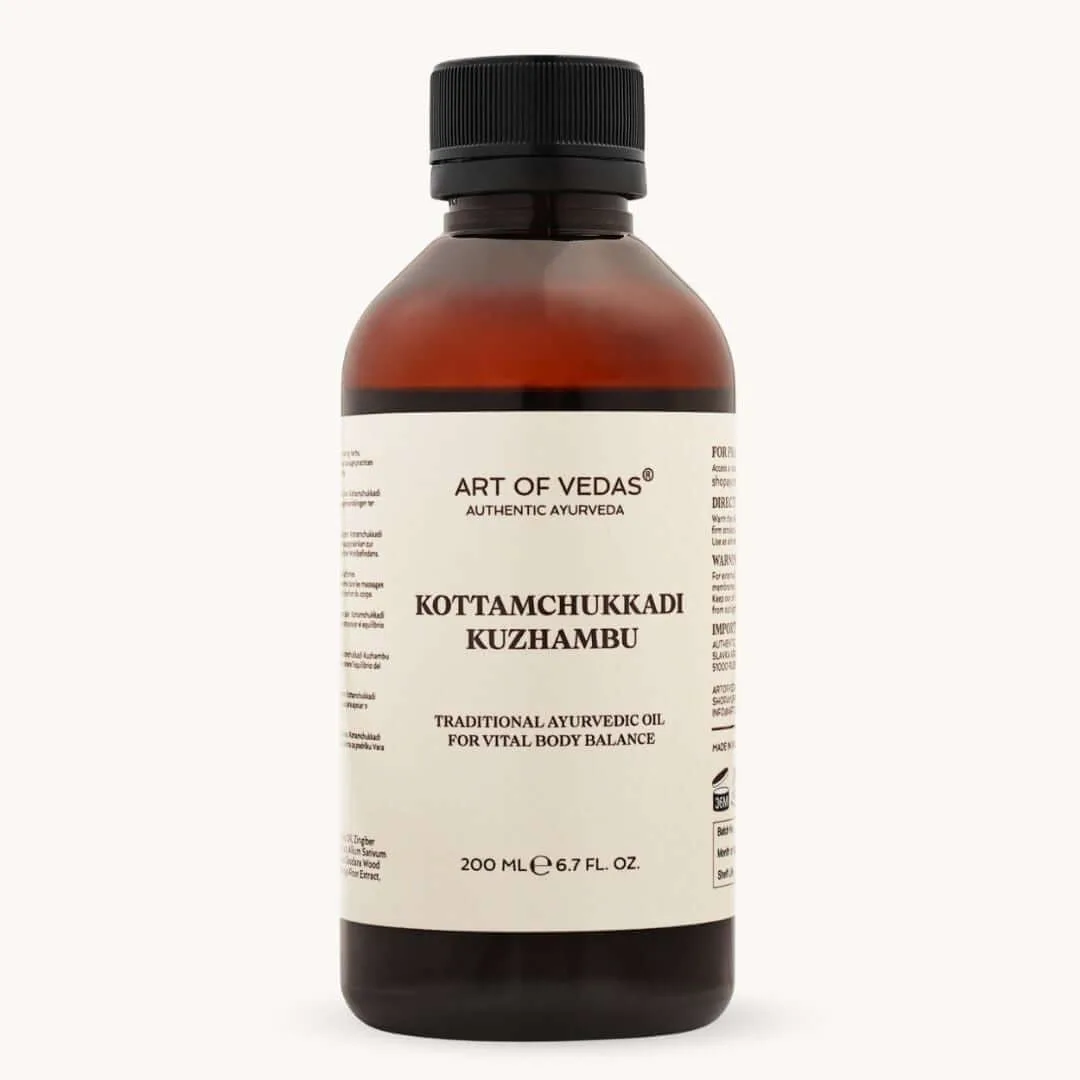
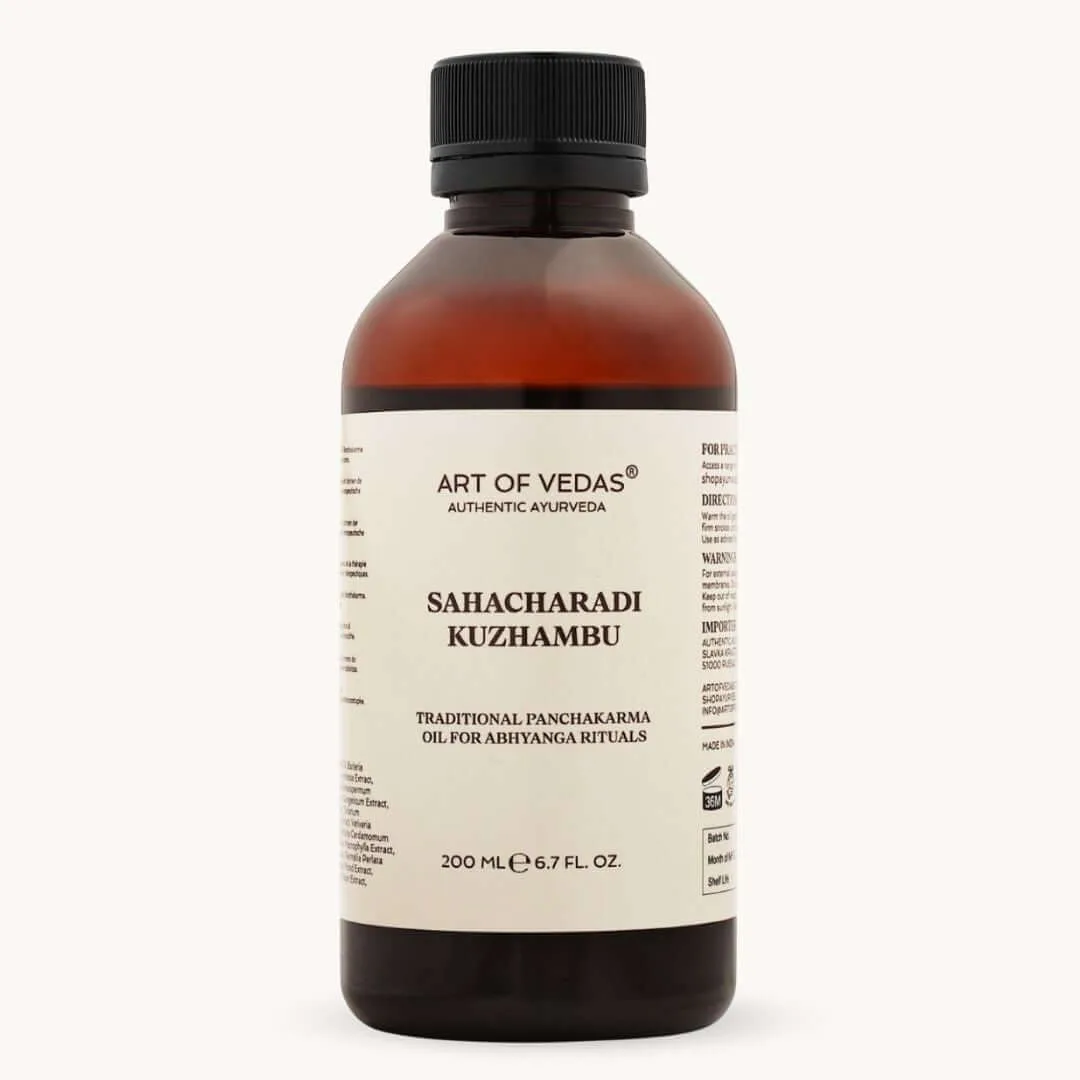
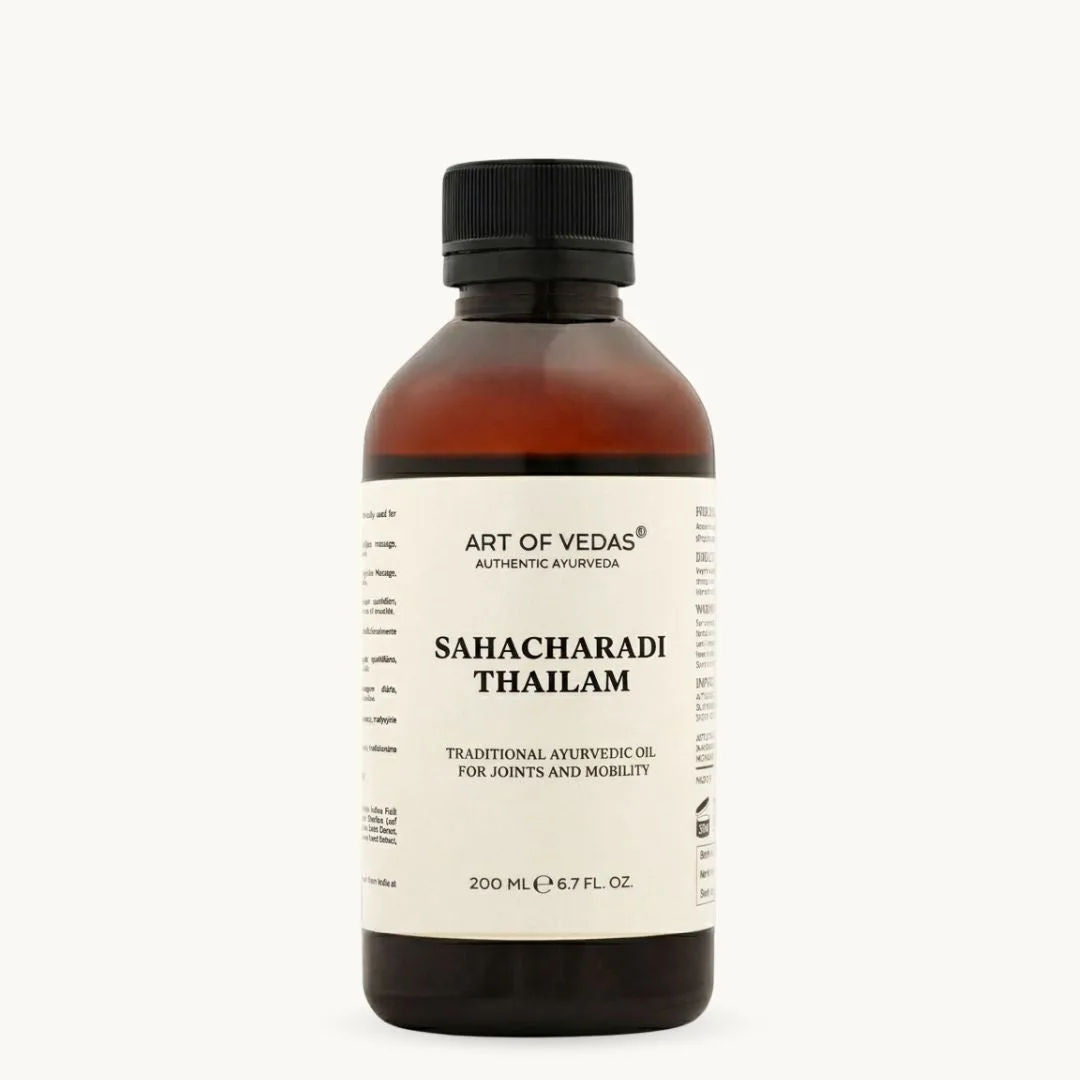
For this region classical practice reaches for warming, lower-body formulas. Kottamchukkadi Kuzhambu is named for its principal botanicals, Kottam and Chukku, the classical dried ginger, which are prepared as paste and decoction and cooked into the three-fat base; the result is a distinctly warming preparation traditionally used on the hips, lower back and legs. Sahacharadi Kuzhambu is built around Sahachara, the botanical at the heart of classical's lower-body tradition, whose background is described in our Sahacharadi Thailam guide. Many households keep the first for cold weather and the second for regular evening use.
Knowing the limits of self-care
A warm preparation and rest are comfort measures for the ordinary tiredness of a working back. They are not an answer to everything. If discomfort in the lower back is persistent, sharp, spreads into the legs or follows an accident, set the routine aside and consult a qualified professional. Self-care sits alongside good judgement, never in place of it.
Frequently Asked Questions
How warm should the preparation be?
Comfortably warm, never hot. Softened through the jar in a water bath is exactly right; test a little on the inner forearm first.
How often can I repeat the routine?
Daily in a demanding week is reasonable. Most people settle on three or four evenings, keeping the rest position even on nights they skip the preparation.
Can I sit or walk during the resting time?
It is better to lie supported for the full period. The stillness is part of the tradition; twenty minutes lying down is worth more than forty spent moving.
Should I use heat as well?
A warm towel over the applied area is traditional and pleasant. Avoid strong heat sources directly on the skin over the preparation.
Which formula should I start with?
Sahacharadi Kuzhambu is the broader everyday choice; Kottamchukkadi Kuzhambu is the more warming of the two and suits cold seasons and cold constitutions.
This article describes traditional Ayurvedic practice for general information and personal care. It is not medical advice. If discomfort persists, if you are pregnant or if your skin reacts easily, please consult a qualified professional before continuing a new routine.