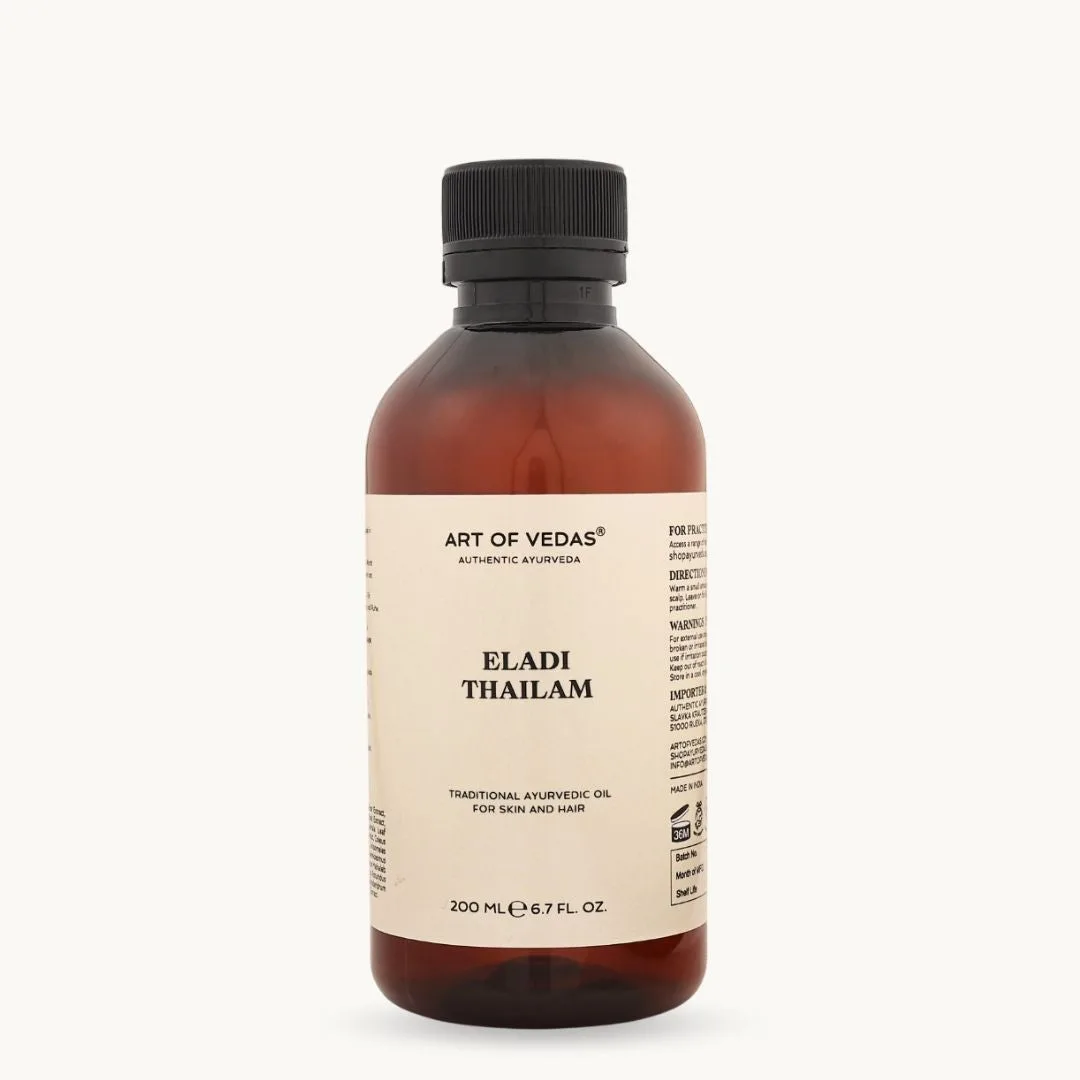
Eladi Thailam oder Nalpamaradi Thailam? Wer vor dieser Frage steht, sucht meist einen klaren Sieger. Den gibt es nicht, denn die beiden Öle sind nah verwandt und setzen doch jeweils einen eigenen Schwerpunkt. Beide stammen aus der Tradition der klassischen Hautöle, beide zählen zu den Varnya-Zubereitungen, die dem Teint zugutekommen, und beide werden seit Generationen für eine weiche, ebenmäßige und frisch wirkende Haut verwendet. Unterschiedlich ist die Ausrichtung: Eladi setzt auf Duft und Geschmeidigkeit, Nalpamaradi auf das gleichmäßige Hautbild. Die folgende Gegenüberstellung zeigt, welches Öl zu welcher Haut und zu welcher Pflegeroutine passt.
Zwei Öle, zwei Handschriften
Beide Öle wurzeln in der Tradition der mit Kräutern ausgekochten Hautöle, und beide werden in der Regel in einer leichten Kokosbasis angesetzt. Auch in der Anwendung unterscheiden sie sich kaum: wenige Tropfen, sanft in die gereinigte Haut einmassiert. Dahinter steht dieselbe Überzeugung, dass regelmäßige, unaufgeregte Ölpflege dem Hautbild mehr bringt als ein einzelner spektakulärer Schritt. Die Entscheidung fällt deshalb nicht zwischen besser und schlechter, sondern zwischen zwei Schwerpunkten.
Eladi Thailam: das duftende Pflegeöl
Namensgeberin des Eladi Thailam ist die Eladi-Gruppe aromatischer Kräuter, allen voran Ela, der Kardamom. Entsprechend duftend und geschmeidig fällt der Charakter des Öls aus; traditionell wird es für eine glatt wirkende, frische Haut verwendet. Viele schätzen es als Allrounder für Gesicht und Körper, nicht zuletzt wegen seines feinen Aromas. In unserem Sortiment finden Sie es als Eladi Thailam; die weiteren Anwendungen beschreibt der Leitfaden zu Vorzügen und Anwendung, und welche Rolle das Öl für den Teint spielt, lesen Sie im Beitrag zu Eladi Öl für ein ebenmäßiges, strahlendes Hautbild.
Nalpamaradi Thailam: der Klassiker für das gleichmäßige Hautbild
Der Name geht auf Nalpamara zurück, die vier traditionellen Feigenrinden, die gemeinsam mit Kurkuma in eine Kokosbasis eingearbeitet werden. Kein anderes Öl verbindet die Überlieferung so eng mit einem gleichmäßig wirkenden Teint, weshalb es in der täglichen Hautpflege seit Langem gesetzt ist. Bei uns heißt es Nalpamaradi Kera Thailam; wer es lieber nicht ölig mag, greift zur Ayurveda-Gesichtscreme mit Nalpamaradi.
Welches Öl passt zu wem?
- Sie suchen ein duftendes Pflegeöl für Gesicht und Körper? Dann ist Eladi Thailam Ihre Wahl.
- Ihnen geht es um ein gleichmäßiges Hautbild? Dann ist Nalpamaradi Thailam Ihre Wahl.
- Creme statt Öl? Die Nalpamaradi-Gesichtscreme zieht leichter ein und fettet nicht.
- Warme, eher fettige Haut? Beide Öle stehen auf Kokosbasis; sparsam auftragen und Überschüssiges abnehmen.
- Zum ersten Mal ein Gesichtsöl? Vorab an der Innenseite des Unterarms testen.
Die Rezepturen im Überblick
Im Zentrum von Eladi steht Ela, der Kardamom, aromatisch und dem Teint zuträglich, ergänzt um Twak und Patra, Zimtrinde und Zimtblatt, sowie Naga Kesara, eine duftende Varnya-Blüte; getragen wird die Rezeptur von Sesam- oder Kokosöl. Nalpamaradi baut dagegen auf den Nalpamara-Rinden auf, den vier Feigenarten Vata (Banyan), Ashwattha (Pappelfeige), Plaksha und Udumbara, die in der Überlieferung als hautfreundlich und kühlend gelten, dazu Haridra und Daruharidra, Kurkuma und Baumkurkuma, beides klassische Varnya-Kräuter, in Kokosbasis. Dasselbe Ziel also, erreicht über unterschiedliche Pflanzen.
Häufige Fragen
Eladi oder Nalpamaradi Thailam, was ist besser?
Pauschal lässt sich das nicht beantworten, weil beide Öle unterschiedliche Stärken haben. Eladi ist der duftende, geschmeidig machende Allrounder für Gesicht und Körper, Nalpamaradi der Klassiker für ein gleichmäßig wirkendes Hautbild. Wem Duft und allgemeine Pflege wichtig sind, greift zu Eladi; wer der Tradition des ebenmäßigen Teints folgen möchte, zu Nalpamaradi. Nicht wenige haben beide im Schrank und wechseln je nach Tag.
Lassen sich beide Öle kombinieren?
Sinnvoller ist der Wechsel an unterschiedlichen Tagen oder für unterschiedliche Zwecke, statt beide in einer Anwendung zu mischen. Mehrere Öle übereinander sind unnötig und wirken schnell schwer. Einfacher ist es, ein Öl zum täglichen Begleiter zu machen und das zweite bestimmten Abenden vorzubehalten. In jedem Fall genügen einige zwischen den Handflächen erwärmte Tropfen auf gereinigter Haut.
Welches Öl ist leichter?
Da beide üblicherweise in Kokosbasis angesetzt werden, fühlen sie sich vergleichbar leicht an. Am leichtesten von allen drei Varianten ist die Nalpamaradi-Gesichtscreme, denn sie zieht rasch ein und hinterlässt keinen öligen Film. Zwischen den beiden Ölen fällt der Unterschied gering aus und ergibt sich eher aus Kräutern und Duft als aus dem Finish.
Sind die Öle nur für das Gesicht gedacht?
Nein. Beide werden traditionell auch am Körper angewendet, überall dort, wo die Haut Geschmeidigkeit und ein gleichmäßiges Bild gebrauchen kann. Üblich ist das Öl abends im Gesicht, zusätzlich an Armen, Beinen oder Schultern im Rahmen der übrigen Pflege. Dosieren Sie so, dass das Öl angenehm einzieht, und nehmen Sie nach der Massage ab, was übrig bleibt.
Wie unterscheiden sie sich von Kumkumadi Öl?
Kumkumadi ist ein eigenständiges Gesichtsöl mit Safran im Mittelpunkt und einer eigenen Überlieferung. Steht auch dieses zur Auswahl, zeigt unser Vergleich von Eladi Thailam und Kumkumadi Öl die Unterschiede und hilft zugleich, Nalpamaradi in die größere Familie der Gesichtsöle und der klassischen Rezepturen einzuordnen.
Nur zur äußerlichen Anwendung. Kein Ersatz für professionelle Beratung.